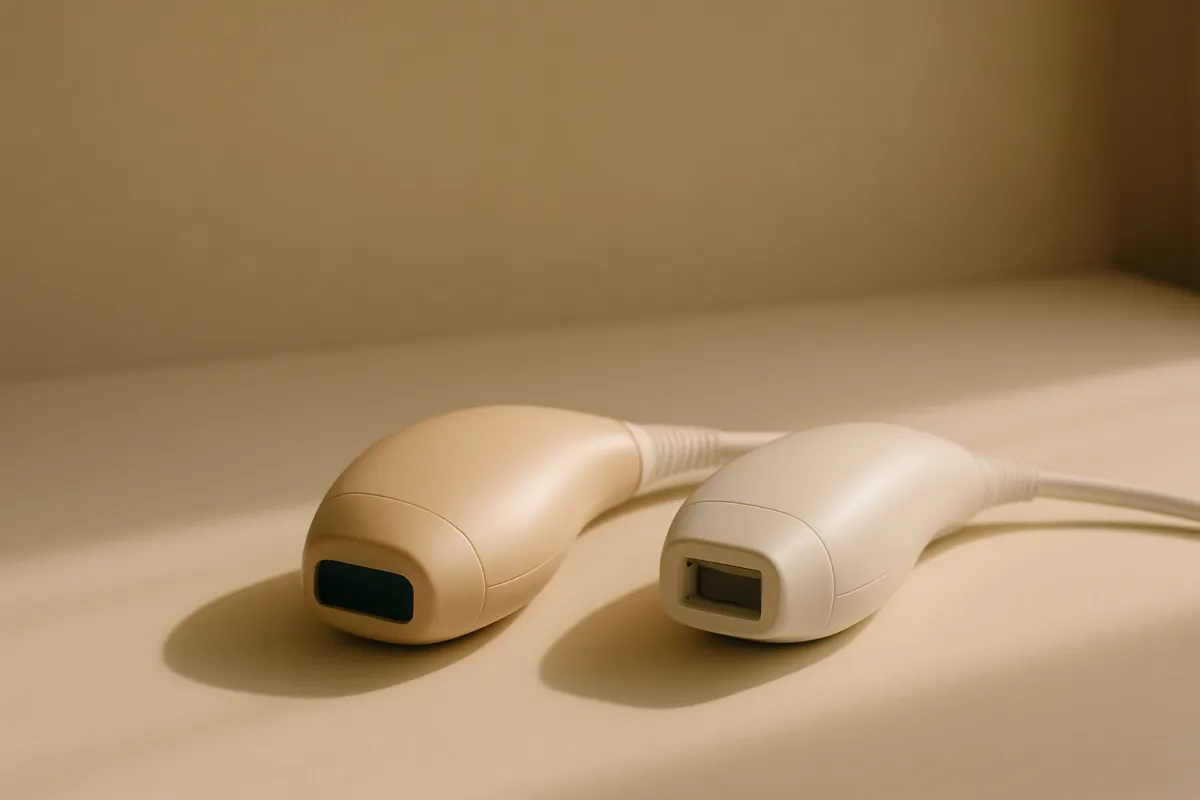
HIFU vs RF lifting in Korea: how to choose
HIFU and RF lifting both use energy to stimulate collagen without surgery, but they work at different depths. HIFU delivers focused ultrasound to deep focal points at the SMAS level, which suits a defined lift. RF delivers radiofrequency heat across a broader band of tissue, which suits overall tightening and texture. Neither requires downtime, and results build gradually over weeks to months. The right choice depends on whether your main goal is lift or general tightening — a KHIDI-registered clinic can advise during a free consultation arranged through Book Korea Medical.
HIFU (ultrasound) vs RF (radiofrequency) at a glance
Both approaches heat tissue to trigger collagen renewal, but they differ in the type of energy, the depth they reach, and what each is suited to address.
| Aspect | HIFU / ultrasound | RF / radiofrequency |
|---|---|---|
| Energy | Focused ultrasound | Radiofrequency heat |
| Targets | Deep SMAS-level lift | Broad dermal tightening and texture |
| Sensation | Brief deep pulses | Warming |
| Downtime | None | None |
| Results appear | Gradual, 2–3 months | Gradual, 1–3 months |
| Results last | 12–18 months | 12–24 months |
HIFU uses ultrasound and RF uses radiofrequency — the two energies are distinct and reach different depths. Microwave-based devices such as Onda are a separate category and are out of scope here. Figures are indicative and vary by device, area, and individual response; a clinic confirms what applies to you.
When ultrasound lifting fits
Ultrasound lifting focuses energy at precise depths, including the deeper SMAS layer that surgeons address in a lift. That focal delivery is why it is often chosen when the goal is a defined lift rather than general firming — along the jawline, under the chin, or around the brow where laxity has started to show. Rather than warming the surface broadly, the device places energy at set depths, so the collagen response is concentrated where the loss of firmness is most visible.
Because the energy reaches deeper points, the sensation is felt as brief deep pulses during treatment, and the collagen response builds over roughly two to three months rather than appearing at once. There is no downtime, so it fits a schedule that cannot accommodate recovery, and the gradual timeline means the change tends to look natural as it develops rather than sudden.
Ultrasound is generally considered when laxity is more pronounced and the aim is to reintroduce contour, not simply to refine texture. It is less about the surface of the skin and more about the structure beneath it, which is why the outcome reads as lift and definition.
If your main concern is that contours have softened and you want to reintroduce definition, ultrasound is usually the approach a clinic will discuss first. A KHIDI-registered clinic can confirm whether your degree and pattern of laxity are a good match during a free consultation arranged through Book Korea Medical.
When RF fits
Radiofrequency heats a broader band of tissue rather than concentrating on deep focal points. That wider, gentler heating suits overall tightening and improvements in skin texture across a whole area — cheeks, neck, or the surface quality of the skin — rather than a single lifted line. The energy raises the temperature of the dermis across a zone, which prompts a more diffuse collagen response than the focal approach of ultrasound.
The sensation is a comfortable warming, results tend to become visible from around one to three months, and there is no downtime. Because it treats broader zones, RF is frequently chosen for generalized firmness and smoother texture, and it can be a fit for skin that needs tightening more than lifting.
RF also suits people who want a milder in-treatment experience and a gradual, even improvement across the face rather than a targeted structural change. Where laxity is early or the concern is that skin looks a little slack and uneven, broad radiofrequency heating is often the more natural starting point.
If your priority is overall tightness and texture across larger areas rather than a targeted lift, RF is likely the more fitting starting point. Share your goals during a free consultation and a KHIDI-registered clinic will route you to the approach that matches, arranged through Book Korea Medical.
FAQ
Which lifts more?
HIFU tends to produce a more defined lift because its focused ultrasound reaches deep focal points at the SMAS level. RF heats broader tissue and leans toward overall tightening rather than a targeted lift. The stronger fit depends on your laxity, which a KHIDI-registered clinic can assess during a free consultation via Book Korea Medical.
Which is better for skin texture?
RF is often the more suitable choice for texture and surface quality, since radiofrequency heats a broad band of dermal tissue and encourages general firming and smoothing. HIFU is aimed more at deep lift than at surface texture.
Is there any downtime?
Neither approach requires downtime. HIFU is felt as brief deep pulses and RF as a comfortable warming during treatment, and you can usually return to your day afterward. A clinic will explain any short-term sensitivity to expect.
Can HIFU and RF be combined?
They target different depths, so some plans use them together to pair a deeper lift with broader surface tightening. Whether combining them suits you depends on your goals and skin, which a KHIDI-registered clinic can assess during a free consultation arranged through Book Korea Medical.
Which one suits me?
As a rule of thumb, choose ultrasound when the goal is a defined lift and deeper laxity, and RF when the goal is overall tightening and texture across broader areas. To confirm the fit for your face and goals, a KHIDI-registered clinic advises during a free consultation via Book Korea Medical.
Ready to get matched?
Free multilingual consultation and a transparent quote from a KHIDI-registered clinic — within 24 hours, at no cost to you.
Start a free consultation →