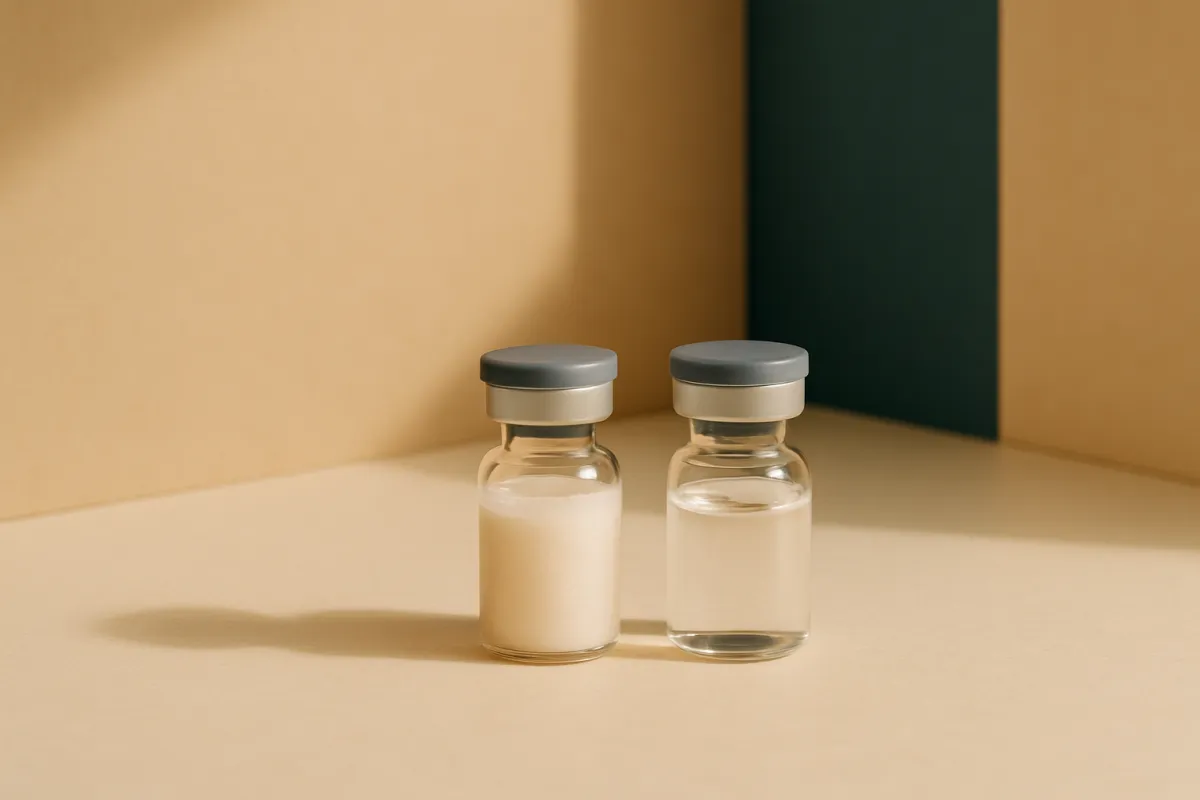
Rejuran vs skin boosters: repair or hydration?
Rejuran and hyaluronic-acid skin boosters are both fine injections placed into the skin itself, but they pursue different goals. Rejuran delivers polynucleotides — DNA fragments derived from salmon — that act as a repair signal, encouraging the skin to rebuild texture, elasticity, and fine-line quality over the weeks after treatment. Hyaluronic-acid boosters deliver a water-binding molecule, so their effect is hydration: a dewier, plumper, glowing surface that appears sooner. In short, Rejuran is repair and boosters are hydration, which is why many Korean clinics use them together or in sequence. Which your skin needs first is what a KHIDI-registered clinic assesses during your free consultation, arranged through Book Korea Medical.
Rejuran vs hyaluronic-acid boosters at a glance
Both are skin-level injectables, but the active ingredient sets the goal, timeline, and feel of the result apart. A clinic confirms which profile matches your skin during consultation.
| Aspect | Rejuran (polynucleotide) | HA skin booster |
|---|---|---|
| Active ingredient | Polynucleotides — purified DNA fragments from salmon | Hyaluronic acid, a water-binding molecule the skin already contains |
| Primary goal | Repair: texture, elasticity, fine lines, overall skin quality | Hydration: dewiness, plumpness, surface glow |
| Result timeline | Builds gradually over weeks as the skin responds | Hydration effect appears within days of treatment |
| Typical course | Commonly 2–4 sessions spaced about 2–4 weeks apart | Commonly 2–3 sessions spaced about 2–4 weeks apart |
| Downtime | Small injection bumps and redness, usually settling in 1–3 days | Small injection bumps and redness, usually settling in 1–2 days |
| Feels right for | Rough texture, early aging, thin or damaged skin | Dry, dull skin chasing the glass-skin glow |
What Rejuran does: texture and repair
Rejuran is a polynucleotide injectable — often described as a salmon-DNA healer — placed in fine droplets across the skin. The polynucleotides do not add volume or hold water in any meaningful amount; they act as a biological signal that nudges the skin's own repair processes. Over the following weeks, treated skin tends to show finer texture, better elasticity, and a gradual softening of fine lines and enlarged-pore appearance.
Because the mechanism is regenerative rather than cosmetic, the result is slow and cumulative. Little changes in the first days; the improvement emerges across a course, which is why clinics commonly plan two to four sessions spaced a few weeks apart. Skin that is thin, rough, or recovering from damage — including acne-scar-prone texture — is the classic candidate.
Immediately after treatment, expect small raised bumps at the injection points and some redness, usually settling within one to three days. That short visible phase is worth planning around photos or events on a trip. Whether your skin's issue is genuinely textural — the problem Rejuran addresses — is a judgement to make in person with a KHIDI-registered clinic during your free consultation, which you can arrange through Book Korea Medical.
What HA boosters do, and how the two combine
Hyaluronic-acid skin boosters take the opposite route to a related destination. HA is a molecule that binds many times its weight in water, and micro-injecting a soft, spreadable form of it into the skin raises hydration from within. The visible result is the one associated with the glass-skin look: a dewier, plumper, light-reflecting surface. Because the effect is physical hydration rather than a repair response, it appears within days and is easy to appreciate quickly.
The two treatments are complementary rather than competing, and Korean clinics frequently plan them together — sometimes in the same visit, sometimes alternating sessions a few weeks apart. A common logic is Rejuran for the underlying skin quality and an HA booster for the surface glow, so the repair work happens beneath a well-hydrated finish.
If you are choosing one for a single trip, the honest question is what your skin lacks: texture and resilience point to Rejuran, while dryness and dullness point to an HA booster. Rather than deciding from product names, have a KHIDI-registered clinic examine your skin and sequence the plan during your free consultation, which you can arrange through Book Korea Medical.
FAQ
What is the difference between Rejuran and a skin booster?
Rejuran is a polynucleotide injectable that signals the skin to repair itself, improving texture and elasticity gradually over weeks. A hyaluronic-acid skin booster hydrates the skin directly, producing a dewy, plump glow within days. One rebuilds, the other moisturizes from within. A KHIDI-registered clinic tells you which your skin actually needs during a free consultation arranged through Book Korea Medical.
How many Rejuran sessions do I need?
Clinics commonly plan two to four sessions spaced about two to four weeks apart, because the repair response builds cumulatively rather than appearing after one visit. Maintenance sessions may follow once or twice a year. The right count for your skin depends on its starting condition, which a KHIDI-registered clinic assesses during the free consultation you can set up through Book Korea Medical.
Can I get Rejuran and a skin booster together?
Yes — the combination is common in Korea because the two do different jobs: polynucleotides handle repair while hyaluronic acid handles hydration. Clinics may treat both in one visit or alternate them across sessions. Whether combining suits your skin and schedule is a plan a KHIDI-registered clinic designs during your free consultation via Book Korea Medical.
Is there downtime after these injections?
Both leave small raised bumps and mild redness at the injection points, typically settling within one to three days for Rejuran and one to two days for HA boosters. Most travelers plan a quiet day or two afterward rather than true downtime. If your itinerary is tight, a KHIDI-registered clinic can time the session sensibly during your free consultation through Book Korea Medical.
Which one gives the glass-skin look?
The immediate glass-skin glow comes mainly from hyaluronic-acid boosters, because hydration is what makes skin look dewy and light-reflecting. Rejuran contributes indirectly by improving the texture that glow sits on, which is why many plans use both. To find the mix that fits your skin, arrange a free consultation with a KHIDI-registered clinic through Book Korea Medical.
Ready to get matched?
Free multilingual consultation and a transparent quote from a KHIDI-registered clinic — within 24 hours, at no cost to you.
Start a free consultation →