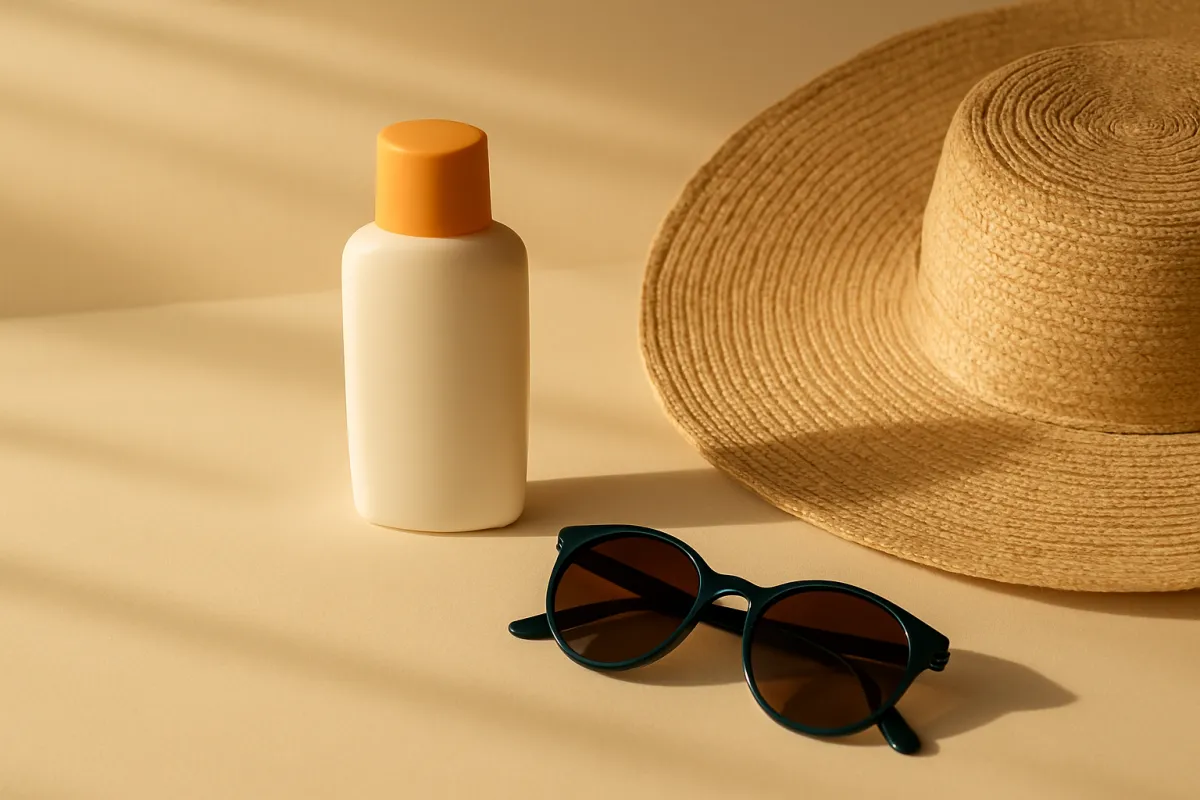
How do you protect skin from the sun after laser treatment?
After a laser treatment, your skin is temporarily far more sensitive to sunlight, because the laser creates a controlled injury that leaves the surface thinner and the pigment cells underneath more reactive. Ultraviolet exposure in that window can trigger dark patches — post-inflammatory hyperpigmentation — which undoes the very result you traveled for. The working rules while sightseeing are simple: a broad-spectrum, high-SPF sunscreen before you leave the hotel, reapplication every two to three hours, a brimmed hat, and shade during midday hours. Caution typically lasts at least two to four weeks, and longer after deeper treatments; your clinic sets the exact window. Book Korea Medical can arrange that guidance through a free consultation with a KHIDI-registered clinic.
Why lasered skin is photosensitive
Laser treatments work by delivering controlled energy into the skin — breaking up pigment, heating deeper layers, or removing fine surface tissue depending on the device. Whatever the target, the skin responds as it does to any injury: the barrier is temporarily thinner, new cells are young and unprotected, and the melanocytes that produce pigment sit in a reactive, easily provoked state. Sunlight is exactly the wrong input at that moment, because ultraviolet light tells those reactive pigment cells to produce more melanin.
The specific risk is post-inflammatory hyperpigmentation: patches that darken where skin was healing, sometimes appearing weeks after the trip ends. It is more likely in skin that tans easily, after more aggressive treatments, and with repeated unprotected exposure rather than one brief lapse. The frustration is that it reverses the point of the treatment — a session aimed at clearing pigment can leave new pigment behind if the healing window is spent in strong sun. That is why sun protection is not a side note in laser aftercare; it is the central instruction.
How long the caution lasts depends on depth. Lighter treatments such as toning are commonly given a window of roughly two to four weeks of deliberate sun care, while deeper resurfacing extends it further. The window is also not binary — sensitivity fades gradually, so the earliest days matter most. Your treating clinic tells you the specific period for your treatment and skin.
Sun habits that fit a travel day
Build the routine around the fact that you will be outdoors more than usual. Apply a broad-spectrum sunscreen of SPF 50 or similar before leaving the hotel, and carry it with you — reapplication every two to three hours is what keeps the protection real, especially after sweating in summer humidity. Then add physical measures that need no discipline: a brimmed hat, sunglasses, the shaded side of the street, and an umbrella, which is ordinary sun equipment in Korea and draws no attention.
Plan the itinerary the same way. Place museums, underground shopping arcades, and indoor markets in the late-morning-to-mid-afternoon band when ultraviolet is strongest, and keep palaces, river walks, and hikes for earlier or later hours. Remember that UV passes through cloud and window glass, so overcast days and long bus rides still count as exposure. Skip beaches, tanning, and long unshaded afternoons entirely until the clinic releases you.
Watch for the signals that deserve a message rather than patience: redness that spreads or intensifies after the first couple of days, blistering, patches that are turning darker, or burning that grows instead of fading. Send the clinic photos promptly instead of waiting until you are home — early adjustments are simpler. Which signs matter for your specific treatment, and for how long, is exactly what a KHIDI-registered clinic walks you through during your free consultation, which you can arrange through Book Korea Medical.
Sun caution by Korean season
Korea's four seasons change the shape of sun care, but never remove the need for it. Here is what shifts across the year for freshly lasered skin.
| Season | Sun character | What it means after laser |
|---|---|---|
| Spring (Mar–May) | UV climbs fast while the air still feels cool and mild | The pleasant weather understates real exposure; run the full SPF-and-hat routine from day one. |
| Summer (Jun–Aug) | Peak UV with heat and high humidity | Sweat thins sunscreen, so reapply more often; favor early-morning and evening sightseeing. |
| Autumn (Sep–Nov) | Clear skies with deceptively strong UV | Long outdoor days in ideal weather add up; shade breaks and reapplication still apply. |
| Winter (Dec–Feb) | Lower UV, dry air, and glare from snow | Keep sunscreen on for reflected light, and add moisturizer — cold, dry air stresses healing skin. |
Seasonal patterns are general travel knowledge, not medical advice. Your clinic's aftercare instructions are the binding reference.
FAQ
How long should I avoid sun after laser treatment?
Roughly two to four weeks of deliberate sun care is the commonly discussed window for lighter treatments such as toning, and deeper resurfacing extends it. Sensitivity fades gradually rather than ending on a date, so the first days matter most. The specific window for your treatment and skin is set by the clinic — something Book Korea Medical can have confirmed for you in a free consultation before you travel.
What sunscreen should I use after laser?
A broad-spectrum product with a high SPF — 50 is a common working standard — applied before you go out and reapplied every two to three hours. Mineral-filter formulas are often suggested for freshly treated skin because they tend to sit gently on a rebuilding barrier, but the right choice for your skin is a clinic question. Ask it during the free consultation you can arrange through Book Korea Medical.
Can I go sightseeing the day after laser toning?
Usually yes — light treatments such as toning generally do not confine you indoors. The condition is that sightseeing happens under protection: sunscreen applied and reapplied, a hat, shade during midday, and no long unprotected hours outdoors. If your itinerary is packed with outdoor days, say so before treatment; a KHIDI-registered clinic can time the session around it during your free Book Korea Medical consultation.
Do I still need sun care in a Korean winter?
Yes. Winter UV is lower but not gone, and snow reflects light back onto the face, so a clear January day can deliver real exposure. Cold, dry air also stresses healing skin, which makes moisturizer part of the same routine. Winter travelers follow the same window the clinic gives — and that window is easy to confirm through the free consultation Book Korea Medical arranges.
What signs after laser mean I should contact the clinic?
Message the clinic — ideally with photos — if redness spreads or intensifies after the first couple of days, if you see blistering, if treated areas are turning darker, or if burning grows instead of fading. Early contact keeps small issues small, even after you fly home. Aftercare contact channels are part of what gets confirmed when Book Korea Medical sets up your free consultation with a KHIDI-registered clinic.
Ready to get matched?
Free multilingual consultation and a transparent quote from a KHIDI-registered clinic — within 24 hours, at no cost to you.
Start a free consultation →